
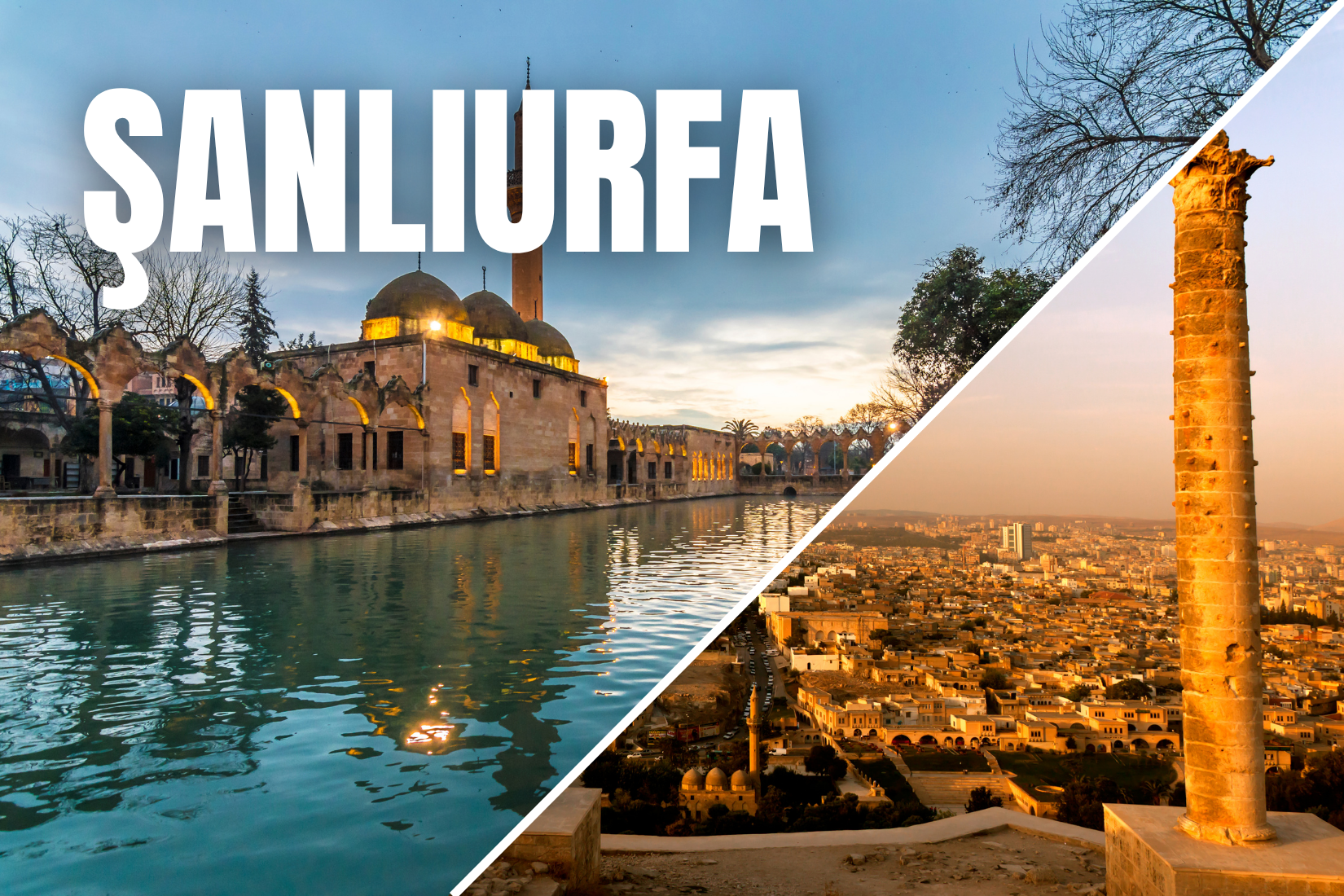

The History of Şanlıurfa: The Ancient City of Prophets and the Cradle of Civilization
Located in the fertile plains of southeastern Turkey, Şanlıurfa—often simply called Urfa—is a city where myth, faith, and archaeology intertwine. Known as the City of Prophets and the Birthplace of Civilization, Şanlıurfa stands as one of the world’s oldest and most spiritually significant cities. With roots stretching back more than 12,000 years, this ancient settlement connects the dawn of humanity with the world’s great religions.
From Prehistory to Civilization: Göbekli Tepe and the Neolithic Revolution
Long before the rise of Mesopotamia’s great cities, the hills around Şanlıurfa were already home to one of humanity’s first monumental sanctuaries—Göbekli Tepe. Discovered in the 1990s and dated to around 9600 BCE, this UNESCO World Heritage Site rewrote the history of civilization.
At Göbekli Tepe, towering T-shaped limestone pillars—some over five meters high—form circular temples decorated with carvings of lions, snakes, foxes, and vultures. Built by hunter-gatherers thousands of years before agriculture or writing, it challenges everything we thought we knew about early human society. Scholars now believe this site marks the birth of organized religion and the dawn of settled life, making Şanlıurfa a cornerstone of Ancient Mesopotamia and global history.
Only 15 kilometers from the modern city center, Göbekli Tepe attracts visitors from around the world eager to walk among the world’s oldest temples—a place where spirituality first took physical form.
The City of Prophets: Abraham’s Legacy
Beyond its prehistoric wonders, Şanlıurfa holds immense religious significance. According to tradition, this is the birthplace of Prophet Abraham (Ibrahim), a central figure in Judaism, Christianity, and Islam. The city’s sacred sites—especially the famous Balıklıgöl (Pool of Sacred Fish)—are living monuments to his story.
Legend tells that King Nimrod tried to burn Abraham for rejecting idolatry. God turned the flames into water and the burning logs into fish, creating the Pool of Abraham that still glimmers in the heart of the city today. Pilgrims from around the world visit Balıklıgöl to feed its sacred carp and reflect on the city’s deep spiritual aura.
Nearby stands the Cave of Abraham, believed to be his birthplace, making Şanlıurfa one of the most revered destinations for believers of the Abrahamic faiths.
Ancient Urfa: From Edessa to the Byzantine Empire
Historically known as Edessa, the city was founded by the Macedonian general Seleucus I Nicator in the 3rd century BCE, after the conquests of Alexander the Great. Edessa soon became a major center of Hellenistic culture and later flourished under Roman and Byzantine rule.
In this era, Edessa was famed for its schools of philosophy and theology, as well as its early adoption of Christianity. By the 2nd century CE, it had become one of the world’s first Christian cities, home to the Edessan School and a hub of Syriac literature. Many early Christian manuscripts and translations of the Bible were produced here, shaping religious scholarship for centuries.
The legendary Mandylion of Edessa, believed by some to be a cloth bearing the image of Christ, is also tied to the city’s mystical history.
Islamic and Ottoman Eras: A Cultural Crossroads
In 638 CE, the city was peacefully incorporated into the Islamic Caliphate, beginning a long period of cultural fusion. Under the Umayyads, Abbasids, and later Seljuks, Şanlıurfa became a thriving trade and learning center linking Mesopotamia, Syria, and Anatolia. The city’s mosques, bazaars, and inns reflect a blend of Arabic, Kurdish, and Turkish influences that still define its architecture today.
When the Ottoman Empire took control in 1516, Şanlıurfa entered an era of stability and prosperity. The Ottomans invested in public works, restored religious monuments, and strengthened the city’s role as a regional hub. The population became a mosaic of Muslims, Armenians, Syriacs, and Jews, each contributing to Urfa’s cosmopolitan identity.
In 1984, the Turkish government awarded the city the honorary title “Şanlı” (Glorious) for its resistance and heroism during the Turkish War of Independence—thus giving it its full modern name: Şanlıurfa.
Cultural Heritage and Timeless Traditions
Şanlıurfa is not only a city of stones and ruins but also a place of living culture. Its traditional music, performed by sıra gecesi ensembles, combines heartfelt singing, storytelling, and shared food in intimate gatherings that capture the city’s communal spirit.
Urfa’s cuisine is among the most celebrated in Turkey. The city is home to legendary dishes such as Urfa kebabı, çiğ köfte, lahmacun, and isot pepper—a smoky, spicy red pepper that has become a symbol of local identity. For travelers, tasting Urfa’s food is as essential as visiting its monuments.
Things to See in Şanlıurfa
Visitors to Şanlıurfa can experience a rare combination of ancient archaeology, spiritual depth, and local hospitality. Must-see attractions include:
-
🏛 Göbekli Tepe – The world’s oldest known temple complex
-
🕊 Balıklıgöl (Pool of Abraham) – Sacred lake filled with holy fish
-
🏠 Abraham’s Cave – The prophet’s legendary birthplace
-
🕌 Rızvaniye Mosque and Halil-ur Rahman Mosque – Icons of Ottoman and Islamic architecture
-
🏰 Şanlıurfa Castle – Overlooking the city with panoramic views
-
🌾 Harran – An ancient city known for its beehive-shaped houses and links to early astronomy
-
🏘 Old Bazaar (Bedesten) – A lively marketplace filled with spices, copperware, and local crafts
Each site tells a different chapter in the city’s story, forming a seamless bridge between prehistoric and modern worlds.
UNESCO Heritage and Modern Recognition
Since Göbekli Tepe’s inclusion in the UNESCO World Heritage List in 2018, Şanlıurfa has emerged as a global archaeological destination. Excavations continue to uncover new layers of early civilization, revealing that the story of humanity’s spiritual awakening began here.
Efforts to preserve Urfa’s old quarters, historic mosques, and traditional houses ensure that future generations can continue to experience the magic of this timeless city.
Why Visit Şanlıurfa
Şanlıurfa is a destination that combines faith, history, and culture like no other. It offers:
-
A journey back to the birth of religion and civilization
-
A chance to explore UNESCO World Heritage Sites
-
Deep spiritual experiences at sacred places like Balıklıgöl
-
Warm local hospitality and unforgettable Urfa cuisine
For travelers seeking to connect with the roots of humanity, Şanlıurfa is not just a place to visit—it’s a place to understand.
Conclusion
From the mysterious stones of Göbekli Tepe to the sacred waters of Balıklıgöl, Şanlıurfa embodies humanity’s eternal search for meaning. It is a city where history, faith, and culture coexist in harmony—a living testament to 12,000 years of civilization.
To walk through Şanlıurfa is to walk through the story of creation itself—from the first temple to the first prophet, from the dawn of time to today.
🧭 Keywords integrated naturally:
Şanlıurfa, History of Şanlıurfa, Göbekli Tepe, Prophet Abraham, Balıklıgöl, Ancient Mesopotamia, Harran, Urfa Cuisine, Things to See in Şanlıurfa, UNESCO World Heritage Site, Travel to Southeastern Turkey.

0 Comment